Nitroxoline has drawn attention in cancer research because it may affect biological pathways that tumors use to grow and adapt. This 2026 guide examines the evidence carefully, separating laboratory findings from proven patient outcomes. The distinction matters. Nitroxoline is an established antimicrobial drug, but that does not make it an established cancer treatment.
Professor Claudiu T. Supuran, a researcher in carbonic anhydrase pharmacology, has studied nitroxoline’s activity against carbonic anhydrases IX and XII. His published work describes it as a “potent inhibitor” of these enzymes. That finding helps explain why researchers investigate the drug in cancer models; it does not show that nitroxoline safely or effectively treats cancer in people. A promising mechanism is only one piece of evidence.
This guide reviews proposed mechanisms, preclinical studies, safety questions, and the limits of current evidence. It also considers what future clinical research would need to establish, including effective dosing and patient outcomes. Expect careful distinctions, not a shortcut to treatment advice. Some findings are intriguing; some remain uncertain. That uncertainty deserves attention, too. Research summaries can make early results sound more conclusive than they are, so readers should check study design, evidence quality, and clinical status with qualified healthcare professionals.

Nitroxoline is an older antimicrobial medicine, used in parts of Europe for urinary tract infections. It belongs to the 8-hydroxyquinoline class and can bind certain metal ions. Researchers have explored whether this chemistry affects cancer-related processes, including enzyme activity and blood-vessel growth. The idea is interesting, but it is not proof of patient benefit. The evidence remains limited, with much of the anticancer work coming from laboratory studies rather than large clinical trials. That distinction matters.
The World Health Organization’s International Agency for Research on Cancer estimated 20 million new cancer cases worldwide in 2022. That burden encourages careful study of existing medicines, but urgency cannot replace reliable evidence. Nitroxoline is not an established cancer treatment, and its safety, dose, interactions, and effectiveness for cancer require appropriate clinical assessment. A cell-culture result is not a treatment plan. Even promising mechanisms can fail in people. Researchers and readers should check study design, patient numbers, and published outcomes before drawing conclusions; the gap between a plausible mechanism and a proven therapy remains substantial.
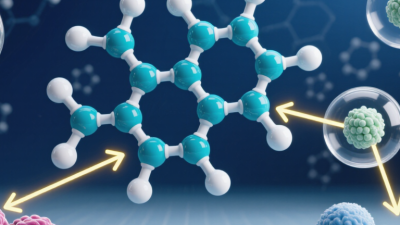
Molecular composition of nitroxoline (C₉H₆N₂O₃; molecular weight 190.16 g/mol).
Nitroxoline is an antimicrobial drug investigated in preclinical cancer research. This chart shows its chemical composition, not cancer-treatment efficacy; it should not be interpreted as evidence that nitroxoline is an established cancer treatment. Molecular data: PubChem.
Nitroxoline is being studied for possible anticancer effects, but it is not an established cancer treatment. Research has focused on proposed mechanisms, not proven benefits for patients. In laboratory studies, nitroxoline has been reported to inhibit MetAP2, a protein linked to endothelial cell growth. This raises the possibility that it could interfere with the formation of blood vessels that support tumors. Its metal-binding properties may also affect enzymes and other cellular processes. The details remain uncertain. A change seen in cultured cells does not show that a tumor will shrink in a person.
Tips: When reading a study, check whether it involved cells, animals, or people. These are very different levels of evidence. Note the dose and the study’s limitations, too. A microscope image can look compelling, yet still leave major questions unanswered.
Researchers are still investigating how these effects relate to cancer biology, which tumors might respond, and what risks could arise. Early findings cannot establish safety or effectiveness in patients. Nitroxoline should not replace or delay standard cancer care. Anyone considering a treatment change should discuss it with their oncology team, using reliable clinical evidence. The research is promising enough to examine, but the picture is incomplete.
Nitroxoline’s proposed anticancer effects remain preclinical. Laboratory studies have explored its influence on tumor-cell growth and metal-dependent enzymes, but results can vary by cell type, dose, and experimental setup. A dish is not a patient. Tumors in people interact with immune cells, blood vessels, and treatments that simple models may not reproduce. Animal findings also cannot establish a safe or effective human dose.
The scale of cancer makes careful testing essential: IARC’s GLOBOCAN 2022 estimates recorded about 20 million new cases and 9.7 million cancer deaths worldwide. Those figures describe the need, not evidence for nitroxoline. A 2019 analysis in Biostatistics estimated that oncology drug candidates entering Phase I had about a 3.4% chance of eventual approval. That is a broad industry estimate, not a nitroxoline-specific forecast. It shows why early signals should not be presented as treatment results. Reproducible experiments, pharmacology, toxicity data, and controlled human trials are still needed to assess clinical value. The gap is real. Preclinical evidence can guide research, but it cannot support replacing prescribed cancer care.
Nitroxoline is an older antimicrobial drug now being examined for possible anticancer effects. The key question is not whether laboratory findings look promising, but whether they translate into safe, meaningful benefits for people. Current evidence remains limited. Much of the research comes from cells and animal models, where researchers can measure changes in tumor growth under controlled conditions. These results can help shape hypotheses, but they do not establish an effective cancer treatment.
Clinical evidence is a major gap. Small or early studies, where available, cannot reliably show whether nitroxoline improves survival, symptoms, or quality of life. Researchers still need well-designed trials that report dose, cancer type, side effects, and comparisons with standard care. Details matter. For example, a change in a lab marker is not the same as a tumor shrinking on scans. It is also unclear which patients, if any, might benefit, or how the drug could interact with other treatments. That uncertainty deserves more attention than optimistic headlines sometimes give it. For now, nitroxoline should be viewed as an investigational research subject, not a proven cancer therapy; treatment decisions belong with qualified oncology professionals.
Evidence snapshot: Nitroxoline is an antimicrobial drug that has been investigated for possible anticancer effects in preclinical research. It is not an established cancer treatment. Findings below distinguish laboratory evidence from demonstrated benefit in people.
| Research dimension | What the evidence supports | Clinical research status | Key evidence gap |
|---|---|---|---|
| Established medical use | Nitroxoline is an antimicrobial agent used in some countries for urinary tract infections. This use does not establish anticancer activity. | Antimicrobial use is separate from cancer research; it is not an approved cancer therapy. | Cancer-specific dosing, safety, and benefit cannot be inferred from its use as an antimicrobial. |
| Laboratory studies | Preclinical studies have explored effects on cancer-related processes and cancer-cell growth. Laboratory results are hypothesis-generating, not proof of treatment efficacy. | Preclinical evidence only unless supported by adequately reported human trials. | Results need independent replication and testing in relevant models at exposures achievable and tolerable in people. |
| Proposed anticancer mechanisms | Researchers have investigated several possible biological mechanisms. A proposed mechanism or activity in a cell assay does not establish that the drug controls a tumor in a patient. | Mechanistic research; no mechanism is validated as a basis for clinical cancer treatment. | The relevant targets, tumor selectivity, and relationship between laboratory effects and human outcomes remain to be established. |
| Human efficacy | There is no established clinical evidence that nitroxoline improves cancer response, survival, or quality of life. | No established oncology treatment indication or practice-standard role. | Prospective trials with a defined cancer type, comparator, endpoints, and adequate follow-up are needed to assess efficacy. |
| Clinical trial status | A current registry search is necessary to confirm whether any new studies have been registered or updated. Registry entries alone do not demonstrate benefit. | Check the live registry for current status, study design, recruitment, and results. | Search ClinicalTrials.gov for nitroxoline and cancer; confirm findings against trial publications and registry updates. |
| Dose and drug exposure | Antimicrobial dosing cannot be assumed to produce anticancer exposures or effects. | No established cancer dose or oncology treatment schedule. | Human pharmacokinetic and dose-finding studies must determine whether relevant tumor exposure is achievable safely. |
| Safety in people with cancer | Experience in an antimicrobial setting does not establish safety alongside chemotherapy, immunotherapy, radiation, or other cancer medicines. | Oncology-specific safety and interaction evidence is insufficient to guide use as cancer treatment. | Trials need to assess adverse events, organ function, drug interactions, and safety in relevant patient groups. |
| Overall evidence assessment | Research interest is not equivalent to proven therapy. Clinical benefit has not been established. | Evidence level: preclinical / investigational. | Do not substitute nitroxoline for standard cancer care. Any cancer-related use should be evaluated by an oncology clinician and, where appropriate, within a properly reviewed clinical trial. |
Literature search: PubMed search for nitroxoline and cancer. Research and registry records can change; check the original publications and live trial records for the latest information.
Any 2026 guide to nitroxoline should begin with a clear boundary: laboratory promise is not proven cancer treatment. Published anticancer evidence remains predominantly preclinical. It cannot establish patient benefit, safe oncology dosing, or long-term risks. That gap matters.
AACR’S 2024 REPORT AACR’s 2024 Cancer Progress Report reports 69% U.S. five-year relative cancer survival for 2014–2020. This population figure reflects broad progress, not evidence for nitroxoline. When assessing a study, check its design, sample size, comparison group, measured outcomes, and independent replication. Cell killing in a dish is not tumor shrinkage in people.
Safety needs equal scrutiny. Nitroxoline’s antimicrobial use does not establish safety at cancer-treatment doses. Review the proposed dose, formulation, kidney and liver function, allergies, and other medicines with an oncology clinician or pharmacist. Do not self-dose. Look for registered human trials, ethics oversight, adverse-event reporting, and published results. FDA’s Project Optimus stresses selecting cancer-drug doses that balance activity with tolerability. If a report omits dose rationale or harms, treat its claims cautiously.