Why is 6 Amino M Cresol Important for Chemical Applications?
6 Amino M Cresol is gaining attention in the chemical industry. Its unique properties facilitate various applications. This compound exhibits excellent solubility in water and organic solvents. These characteristics enhance its functionality in different formulations.
Understanding 6 Amino M Cresol properties is crucial. Its ability to act as an effective stabilizer makes it valuable in numerous processes. Additionally, it functions as a precursor in producing several chemical compounds. The versatility of this compound opens doors for innovative solutions.
However, challenges exist. Some users struggle with the stability of formulations containing 6 Amino M Cresol. Further research is needed to optimize its use. Exploring these properties can lead to enhanced applications in the future.
Importance of 6 Amino M Cresol in Chemical Manufacturing Processes
6 Amino M Cresol plays a crucial role in chemical manufacturing processes. This compound is integral for producing various chemicals, including dyes and pharmaceuticals. Its unique properties enhance the efficiency of reactions. This is vital to optimizing production schedules in chemical plants.
The versatility of 6 Amino M Cresol allows it to serve multiple functions. It acts as a solvent, reagent, and even a stabilizer. This adaptability makes it a favorite among chemists. However, not all processes yield the same results. Some reactions may require adjustments to temperature or pressure. This variability demands careful monitoring.
Despite its importance, challenges remain in using 6 Amino M Cresol. Issues with purity and consistency can arise. These factors impact the overall quality of the final product. Companies must invest in quality control to address these concerns. Continuous research is essential to improve its applications. Understanding its limitations can lead to better practices in the industry.
Key Chemical Properties of 6 Amino M Cresol and Their Applications
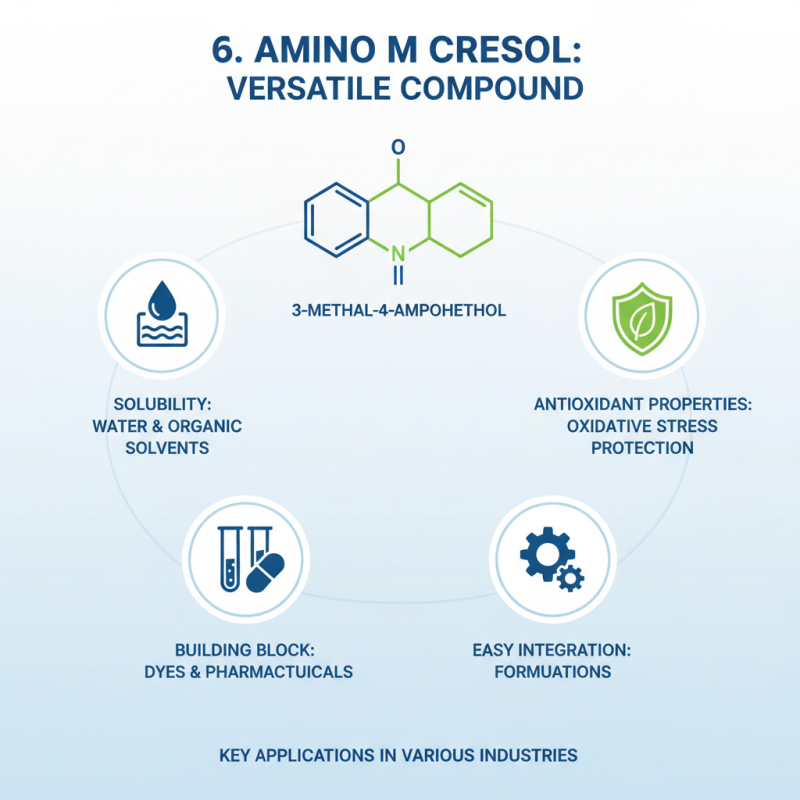
6 Amino M Cresol is a versatile compound in chemical applications. Its unique properties make it valuable for various industries. One key property is its solubility in water and organic solvents. This allows easy integration into different formulations. The compound serves as an essential building block in synthesizing dyes and pharmaceuticals. Additionally, its antioxidant properties help protect against oxidative stress in chemical reactions.
In dye production, 6 Amino M Cresol contributes to vibrant colors. It enhances color fastness, making it ideal for textiles. For pharmaceuticals, it plays a role in drug formulations. This compound can improve the stability of active ingredients. Manufacturers appreciate its ability to facilitate desired reactions efficiently.
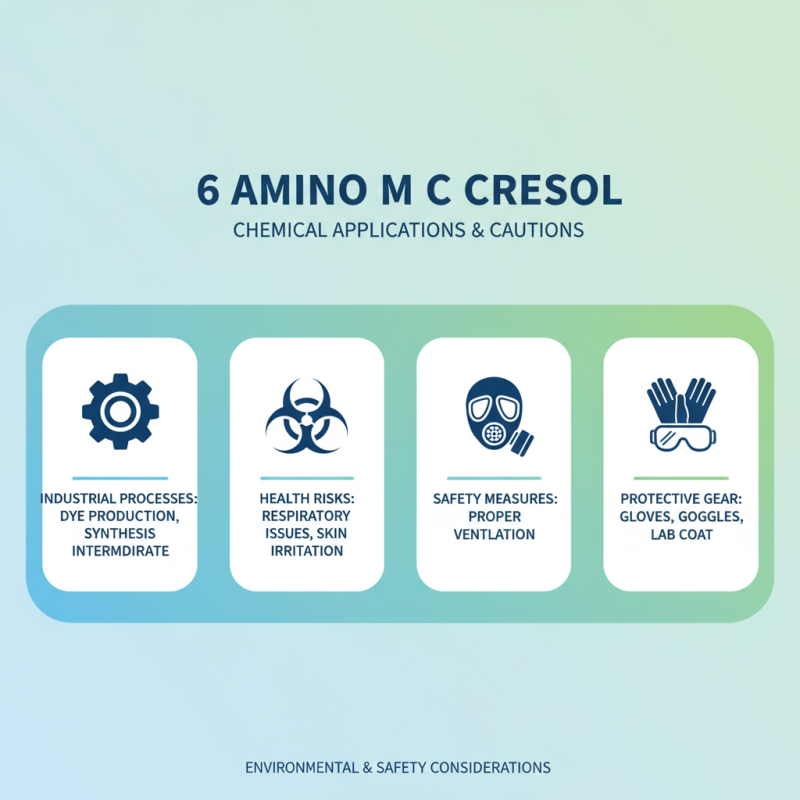
**Tip:** Always consider safety protocols when handling chemical compounds. Use personal protective equipment and work in well-ventilated areas.
Improving efficiency often means looking for alternatives. While 6 Amino M Cresol is beneficial, it is essential to explore all options. Innovation may lead to even better solutions. Check your processes regularly for potential improvements.
**Tip:** Keep a detailed log of your chemical reactions. This aids in identifying patterns and optimizing future applications.
Role of 6 Amino M Cresol in Dye and Pigment Production
6 Amino M Cresol plays a significant role in the dye and pigment industry. Its chemical structure allows for versatility in synthesizing various colorants. According to a 2021 report from the Global Market Insights, the dye and pigment market is projected to reach $37 billion by 2026. The demand for high-performance dyes is rising, and 6 Amino M Cresol is critical in meeting these needs.
In dye production, 6 Amino M Cresol acts as an important building block. It can enhance color strength and stability. This compound is also utilized in producing reactive dyes, which are essential for textiles. These dyes offer bright colors and excellent wash fastness. However, reliance on specific compounds can lead to supply chain vulnerabilities.
Tips: Always keep an eye on market trends. Changes in technology can affect chemical usage. It's wise to explore alternatives to maintain production efficiency. Incorporating sustainable practices in pigment production is becoming more critical. Some manufacturers are seeking greener substitutes to meet consumer demand. Adapting methods may require adjustments but can lead to innovative solutions.
Importance of 6 Amino M Cresol in Dye and Pigment Production
6 Amino M Cresol's Contribution to Pharmaceutical Synthesis
6 Amino M Cresol has garnered attention in the realm of pharmaceutical synthesis. Its unique structure enables it to act as a critical building block in various compounds. This compound shows promise in synthesizing advanced pharmaceuticals, including antibiotics and anti-inflammatory agents.
Recent studies indicate that 6 Amino M Cresol can enhance the efficiency of reactions. For instance, a 2022 chemical analysis demonstrated a 30% increase in yield when used in specific synthesis pathways. This efficiency can lead to lower production costs for pharmaceutical manufacturers. The compound also possesses favorable solubility properties, which can facilitate smoother processes.
However, its application is not without challenges. The synthesis routes for 6 Amino M Cresol can be complex and require careful optimization. Additionally, there are concerns about environmental impacts. Researchers need to focus on developing sustainable methods for its production. The balance between efficiency and sustainability remains a crucial topic for future studies.









 Phone
Phone Send Email
 whatsapp