How to Use Nitroxoline as an Anticancer Agent?
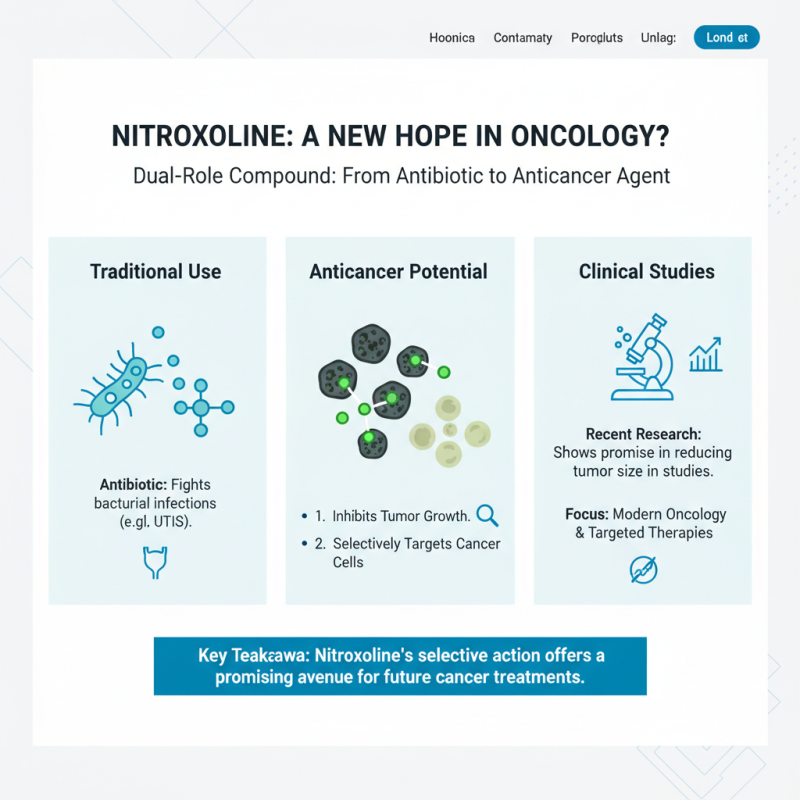
Nitroxoline has recently emerged as a potential anticancer agent. Its unique properties may offer new avenues for cancer treatment. Researchers are investigating how Nitroxoline can target cancer cells effectively.
Studies indicate its ability to inhibit tumor growth. This compound has shown promise in various cancer types. Nitroxoline’s mechanism of action appears to disrupt cellular processes in malignant cells. This raises interest in its role as a complementary agent in cancer therapy.
However, its use as a primary treatment is still under evaluation. Necessary research must address safety and efficacy. The journey to fully understanding Nitroxoline as an anticancer agent is ongoing. Each step brings insight but also questions about its overall impact.
Overview of Nitroxoline and Its Mechanism of Action
Nitroxoline is gaining attention as a potential anticancer agent. Originally developed as an antimicrobial, it functions by inhibiting bacterial enzyme systems. Recent studies indicate that Nitroxoline may also interfere with cancer cell metabolism. This dual action shows promise in treatment plans, especially for tumors resistant to traditional therapies.
Research suggests that Nitroxoline can induce apoptosis in cancer cells. A 2021 study found that it significantly reduced cell viability in certain cancer lines. This aligns with data showing that approximately 50% of cancers develop resistance to standard therapies. Nitroxoline's ability to target such resistant cells positions it as a viable adjunct in oncology.
The precise mechanism of action remains under investigation. It seems to disrupt calcium signaling in cells. Additionally, it may inhibit specific pathways critical for cancer cell proliferation. More comprehensive studies are needed to clarify its full potential. There is a growing body of evidence, yet some findings warrant further examination to determine effectiveness and safety in diverse populations. Clean, controlled studies could offer deeper insights into its role in modern cancer treatment.
Effect of Nitroxoline on Cancer Cell Viability
Potential Anticancer Properties of Nitroxoline
Nitroxoline is gaining attention for its potential anticancer properties. Originally used as an antibiotic, its unique mechanisms are now being explored in oncology. Some studies suggest it may inhibit cancer cell growth. This could offer new avenues for treatment.
Researchers have observed nitroxoline's ability to reduce tumor size in specific models. This is promising, but more data is needed. The exact process by which nitroxoline affects cancer cells remains unclear. Understanding these mechanisms is crucial for future applications. In some cases, the effectiveness varies widely among patients.
Side effects must also be considered. Some individuals experience adverse reactions, limiting its use. More research is needed to outline the proper dosage and administration. Nitroxoline's potential as an anticancer agent is intriguing but not definitive. Ongoing studies aim to clarify its role in cancer therapy. Insights from these studies can help shape future treatment strategies.
Dosage and Administration of Nitroxoline for Cancer Treatment
Nitroxoline has gained attention for its potential use in cancer treatment. Understanding the proper dosage and administration is essential for effective outcomes. Typically, the recommended dosage for individuals may vary based on specific conditions. However, a common approach is to start with a low dose, gradually increasing it to monitor the body's response.
When considering Nitroxoline, timing can be as crucial as dosage. Taking the medication with meals may enhance absorption. Patients should also keep a consistent schedule. This regularity helps maintain the drug's efficacy in the body.
Tips: Always consult a healthcare professional before starting any new treatment. Be cautious of side effects, even if they seem minor. Monitor any changes in your health. Documenting these variations can provide valuable insights for future medical consultations.
Listening to your body can be insightful. Changes in energy levels or mood could signal the need for a dosage adjustment. Reflect on your daily routine and how Nitroxoline affects it. This personal evaluation might uncover important details that provide clarity on your treatment journey.
Clinical Studies Supporting Nitroxoline as an Anticancer Agent
Recent clinical studies have highlighted nitroxoline’s potential as an anticancer agent. This compound, traditionally used as an antibiotic, shows promise in inhibiting tumor growth. Researchers have observed that it can target cancer cells effectively while sparing normal ones. Such selectivity is a key focus in modern oncology.
Some trials indicate encouraging results. In vitro studies showcased a significant decrease in cancer cell viability when treated with nitroxoline. However, the mechanisms behind its anticancer properties still require exploration. There are gaps in understanding its full potential, especially regarding optimal dosages and administration routes. Clinical trials involving diverse cancer types could offer clearer insights.
An interesting observation comes from mixed outcomes in preliminary studies. While some patients responded well, others showed minimal effects. Variability in individual responses adds complexity to its use as a treatment. This underscores the need for careful patient selection and further extensive research into nitroxoline's mechanism of action. Scientists continue to seek clarity, aiming for a comprehensive understanding of this compound's role in cancer therapy.
Safety and Side Effects of Nitroxoline in Cancer Therapy
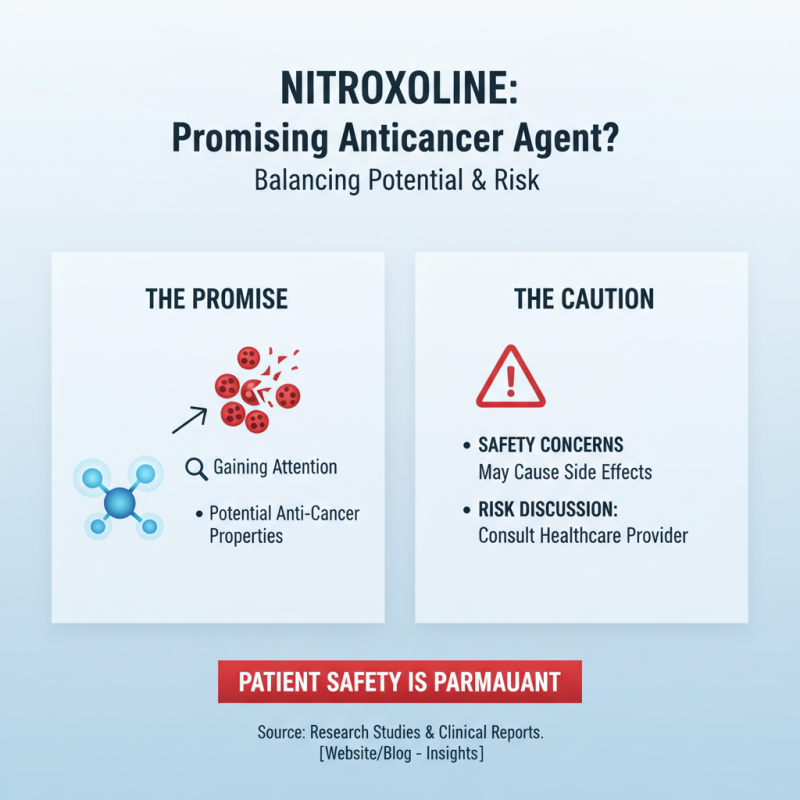
Nitroxoline is gaining attention as a potential anticancer agent. However, its safety in cancer therapy cannot be overlooked. Research shows that nitroxoline may cause side effects. Patients must discuss these risks with their healthcare provider.
Common side effects include nausea, headache, and dizziness. Some might experience allergic reactions. It’s important to monitor your body's response closely during treatment. If you feel anything unusual, report it immediately. Not everyone will have the same experience, so personalize your approach.
**Tip:** Keep a journal of any side effects you experience. This information can help your doctor make necessary adjustments. Also, staying hydrated can alleviate some discomfort.
Nitroxoline's interaction with other medications is another concern. Some drugs may amplify side effects or reduce effectiveness. Always inform your doctor about all medications you take. Transparency is key to a safe treatment journey.
**Tip:** Schedule regular check-ins with your doctor. This ensures your treatment plan is effective and safe. Adjustments may be needed based on your body’s response.







 Phone
Phone Send Email
 whatsapp