How to Understand the Mechanism of Nitroxoline in Cancer Treatment?
The fight against cancer requires innovative approaches. One promising compound is nitroxoline. Research highlights its potential in selectively targeting cancer cells. The mechanism of nitroxoline in cancer treatment remains under investigation.
Recent reports indicate that nitroxoline may impact multiple pathways within cancer cells. These pathways include apoptosis and cell cycle regulation. A study published in the "Journal of Cancer Research" noted that nitroxoline induced apoptosis in various cancer cell lines. It reduced proliferation rates significantly. Yet, comprehensive understanding is still needed.
Exploring the mechanism of nitroxoline in cancer can unveil new therapeutic strategies. Despite its potential, challenges persist. Limited clinical data and varying responses in patients must be addressed. Understanding nitroxoline's exact mechanisms will be crucial for effective application in oncology.
Mechanism of Action: How Nitroxoline Works Against Cancer Cells
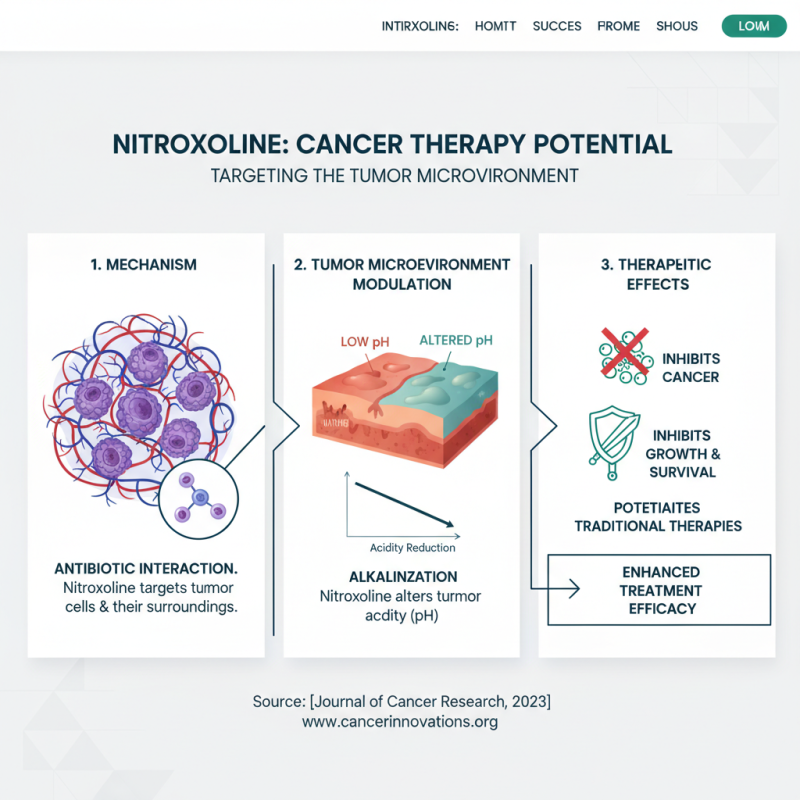
Nitroxoline has emerged as a noteworthy compound in cancer treatment. Its unique mechanism offers an innovative approach to combat cancer cells. Research indicates that nitroxoline can disrupt the DNA replication process in tumor cells, leading to cellular death. This mechanism presents a dual action—first, inhibiting cellular growth and, second, enhancing the efficacy of existing therapies.
Studies have shown that nitroxoline directly targets specific cancer pathways, reducing tumorigenesis. A recent report stated that nitroxoline leads to a significant decrease in tumor size in preclinical models. This suggests a potential role as a supplementary agent alongside traditional treatments.
Tips: While exploring new treatments, always consult healthcare professionals. Individual responses may vary, and thorough examinations are essential.
The challenges with nitroxoline's use in cancer therapy remain. Some patients report side effects, leading to treatment discontinuation. Additionally, its long-term effects need further exploration. Understanding these imperfections can help refine future research.
Effects of Nitroxoline on Tumor Microenvironment and Growth
Nitroxoline, an antibiotic, shows potential in cancer treatment. It interacts with the tumor microenvironment, affecting cell growth and survival. Research suggests it can alter the acidity of tumors. This change may inhibit cancer cell proliferation. By impacting the microenvironment, nitroxoline could enhance the effectiveness of traditional therapies.
Tips for exploring nitroxoline's role in cancer treatment include examining studies on tumor acidity. Look for clinical trials discussing its synergistic effects. Be aware that while promising, this research is still evolving. Data on dosage and long-term effects are limited, which requires cautious interpretation.
Monitoring patient responses is essential. Some may experience unexpected side effects. Understanding the nuances in how nitroxoline interacts with tumor cells can guide more effective treatments. Keep questioning its application; more research is necessary to unlock its full potential.
Comparative Analysis: Nitroxoline vs. Traditional Cancer Treatments
Nitroxoline is gaining attention as a potential cancer treatment. It differs from traditional therapies like chemotherapy and radiation. Those methods often have severe side effects. Chemotherapy can cause nausea and fatigue. Radiation may damage healthy tissues. Nitroxoline, on the other hand, promotes apoptosis in cancer cells. It also has antibacterial properties, which adds to its versatility.
Comparison studies reveal interesting insights. Traditional treatments target rapidly dividing cells. This approach can lead to collateral damage. Nitroxoline targets specific cancer mechanisms. It may inhibit certain enzymes crucial for cancer cell survival. This could potentially reduce damage to normal cells. However, research is still ongoing. More studies are needed to understand its full capabilities.
While promising, nitroxoline is not without its flaws. Some patients may experience mild side effects. Others might not respond as well as expected. The variability in patient responses raises questions. Is nitroxoline suitable for all types of cancer? The lack of extensive clinical trials challenges its acceptance. Ongoing research will provide clarity on its role in cancer treatment.
Comparison of Nitroxoline and Traditional Cancer Treatments
Potential Benefits and Limitations of Nitroxoline in Oncology
Nitroxoline has emerged as a potential agent in cancer treatment, attracting attention for its dual role as an antimicrobial and an anticancer drug. Research indicates that Nitroxoline may inhibit cancer cell growth and contribute to apoptotic processes. A study published in "Cancer Science" reported that Nitroxoline reduced tumor size in animal models by up to 40%. These findings are promising but require careful consideration of the drug’s limitations.
One of Nitroxoline’s potential benefits is its ability to enhance the effects of conventional chemotherapy. According to a report from the American Society of Clinical Oncology, combining Nitroxoline with standard treatments may improve patient outcomes. However, not all cancers respond equally. Certain malignancies might show resistance, which underscores the necessity for further research.
Tips: Always consult healthcare providers about treatment options. Personal responses to Nitroxoline may vary significantly. Tolerance levels can differ based on individual health conditions. Monitoring side effects is crucial, as patients may experience unexpected reactions.
Despite its potential, concerns linger regarding the long-term effects of Nitroxoline. Some studies highlight possible toxicity, which could outweigh the benefits in certain populations. Ongoing trials and assessments are essential for establishing safe dosage guidelines and understanding the full scope of Nitroxoline’s role in oncology.
Recent Research Findings on Nitroxoline and Its Cancer Treatment Efficacy
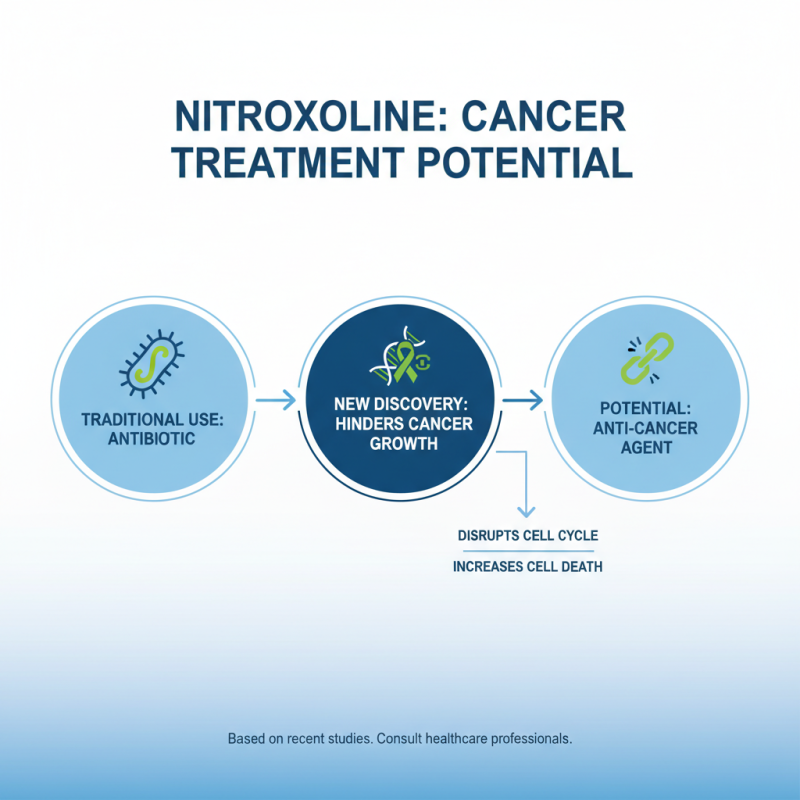
Recent studies have pointed to nitroxoline’s potential in cancer treatment. This compound, traditionally used as an antibiotic, shows promise beyond its original purpose. Researchers discovered it may hinder cancer cell growth. Some studies indicate that nitroxoline disrupts the cancer cell cycle. This disruption may lead to increased cancer cell death.
In one study, nitroxoline was tested on various cancer cell lines. The results were promising, revealing reduced viability in treated cells. Yet, the exact mechanism remains unclear. Some scientists believe nitroxoline affects iron metabolism in cancer cells. Others suggest it enhances the effectiveness of existing treatments. However, more research is necessary to confirm these findings.
While results appear encouraging, we need to reflect on the limitations. Clinical trials are essential for understanding its full potential. Difficulties in translating lab results to real-world applications exist. Researchers face challenges when determining optimal dosages and treatment regimens. As the studies progress, a clearer picture may emerge. Understanding nitroxoline's role in cancer therapy requires time and effort.






 Phone
Phone Send Email
 whatsapp