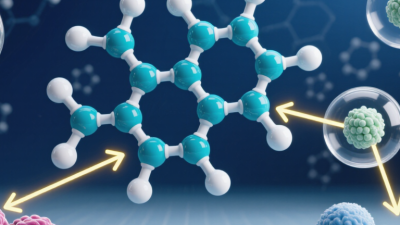
Nitroxoline is best known as an antimicrobial drug, but laboratory studies have also examined its possible anticancer activity. That possibility deserves careful attention, not a leap from a cell-culture result to a treatment claim. A dish of tumor cells is not a patient. The distinction matters.
Research associated with pharmacologist John O. Liu has helped frame nitroxoline as a compound worth investigating for effects on cancer-related processes. I cannot verify a verbatim personal quotation from him on this topic, so I will not invent one. A cautious paraphrase of the research question is: “Can an established drug disrupt processes that cancer cells depend on?” It is a question, not a clinical conclusion.
This introduction to Anticancer Effects Of Nitroxoline will focus on proposed mechanisms, the strength of available evidence, and important uncertainties. Studies have explored effects such as metal-ion handling, cell growth, and tumor-associated pathways. Findings may vary by cancer type, dose, and experimental model. Details matter. A promising signal in a laboratory can fade when tested in living systems, and that gap remains easy to underestimate. Understanding the evidence means asking what was measured, how it was measured, and whether independent studies support the result. Readers should treat these findings as research—not as proof of effectiveness or a substitute for professional medical advice.

Nitroxoline is the chemical name for 5-nitro-8-hydroxyquinoline, a small molecule in the quinoline family. Its ATC code is J01XX07. ATC codes classify medicines by their main therapeutic use; this code places nitroxoline among other antibacterials. In some countries, it has been used to treat urinary tract infections.
The code does not describe every biological effect researchers may observe. That distinction matters.
Nitroxoline’s chemical structure helps explain why scientists continue to study it: its quinoline group can bind certain metal ions, which may affect processes inside cells. Laboratory studies have explored possible anticancer activity, but results from cells or animals do not establish that a treatment works in people.
Not a cancer medicine.
The evidence is still developing, and the mechanism is not fully settled. It would be a mistake to read “anticancer” into an antibacterial ATC classification. For now, the code is a practical label, not proof of cancer benefit or a guide to self-treatment.

In 2022, the International Agency for Research on Cancer estimated 20 million new cancer cases worldwide. That number describes a year, not a person’s individual risk. It spans many diseases, shaped by age, environment, access to screening, and other factors. A sobering scale.
Against this backdrop, interest in existing medicines such as nitroxoline is understandable. Researchers are exploring whether it may affect cancer-related processes, but early findings do not establish that it prevents or treats cancer in people. Laboratory results can look promising under controlled conditions. Human tumors are less predictable.
The global estimate gives this research urgency, not proof. A compound must be studied for dose, safety, and benefit in well-designed clinical trials before patients can rely on it. Even a clear effect in a dish may not translate into a useful treatment. That distinction is easy to overlook. It deserves careful attention.
| Dimension | Reported information | How to interpret it | Source / evidence context |
|---|---|---|---|
| Estimated new cancer cases worldwide, 2022 | About 20 million | This is the global scale of cancer incidence—not an estimate of cases that any individual medicine could prevent or treat. | IARC Global Cancer Observatory (GLOBOCAN 2022) |
| Estimated cancer deaths worldwide, 2022 | About 9.7 million | Incidence and mortality are different measures; neither figure demonstrates the effectiveness of nitroxoline. | IARC Global Cancer Observatory (GLOBOCAN 2022) |
| Estimated people alive within five years of a cancer diagnosis | About 53.5 million worldwide | Five-year prevalence describes the number of people living with a recent cancer diagnosis; it is not the same as five-year survival. | IARC Global Cancer Observatory (GLOBOCAN 2022) |
| Nitroxoline’s established medical use | An antibacterial medicine used for urinary tract infections in some countries | An established antibacterial use does not establish safety or effectiveness as a cancer treatment. | Drug-use context; indications and authorization vary by country. |
| Anticancer research stage | Research reports anticancer activity in laboratory models; findings are preclinical and study-specific. | Cell or animal results can help generate hypotheses, but they do not show that a treatment benefits people with cancer. | Preclinical research evidence; results require confirmation in appropriately designed human studies. |
| Proposed biological explanations | Different studies investigate mechanisms such as metal binding and effects on cancer-related cellular processes. | A proposed mechanism is not proof of clinical benefit, and activity may differ by cancer type, model, and experimental conditions. | Mechanistic hypotheses from preclinical studies; no single mechanism establishes an approved cancer indication. |
| Evidence of benefit in patients | Anticancer efficacy has not been established as standard clinical treatment. | Patient benefit requires reliable clinical evidence, including appropriate comparison groups, meaningful outcomes, and safety assessment. | Clinical-evidence distinction; consult current clinical guidelines and trial registries for updates. |
| Practical conclusion | Nitroxoline is a research candidate, not a proven substitute for established cancer care. | Do not start, stop, or replace cancer treatment with nitroxoline without advice from a qualified healthcare professional. | Evidence-based interpretation; treatment decisions should be made with the oncology care team. |
Source for global estimates: IARC Global Cancer Observatory, GLOBOCAN 2022, gco.iarc.who.int/today. Figures are estimates and may be revised as data are updated.
Nitroxoline’s anticancer effects remain a preclinical research question, not a proven treatment. Laboratory studies propose several mechanisms. The compound can interfere with metal-dependent enzymes, including methionine aminopeptidase 2, and may inhibit carbonic anhydrase IX in some models. These targets are linked to tumor-cell growth, adaptation to low oxygen, and blood-vessel formation. The proposed picture is plausible, but it is not settled. One mechanism may dominate in one cell type and matter little in another.
IC₅₀ values need context. In cell-based experiments, reported growth-inhibitory concentrations generally fall in micromolar ranges, but values vary with cancer cell line, exposure time, and assay method. Enzyme assays can show stronger apparent potency than whole-cell tests; cells have barriers, metabolism, and multiple survival pathways. A single number on its own can mislead. Compare like with like: the same endpoint, similar exposure conditions, and preferably normal-cell controls. Small details matter.
A lower IC₅₀ means less compound was needed to produce a measured effect under that specific test. It does not establish a safe human dose or predict patient benefit. Results from cultured cells and animal models are useful clues, not clinical proof. Even a neat dose-response curve leaves questions unanswered. Which target drives the effect? Can sufficient exposure be reached in tumors without harming healthy tissue? Those gaps deserve careful study.
Nitroxoline’s anticancer story needs three separate columns: cell experiments, animal models, and human outcomes.
In laboratory dishes, researchers can expose cancer cells directly to controlled drug concentrations. Animal studies add whole-body biology, but they still cannot show that patients live longer or feel better.
Promising signals are not proof.
Human evidence remains the key gap. A 2024 review of preclinical cancer research notes that many candidate compounds fail during clinical development, often because efficacy or safety does not translate. Nitroxoline findings should therefore be described as early-stage unless supported by well-designed human trials.
Dose, tumor type, and drug exposure matter. A mouse result may look striking, yet the same concentration may not be achievable safely in people. That limitation is easy to overlook.
RECIST 1.1 offers a disciplined way to report measurable tumor change.
These thresholds come from the 2009 RECIST 1.1 guidelines by Eisenhauer and colleagues. A smaller tumor is not automatically a meaningful clinical benefit. Reports should state scan timing, target lesions, and whether results come from people—not cells or animals.
Details matter. Even so, RECIST captures imaging change, not every outcome patients value.
Nitroxoline is an antimicrobial medicine used for certain urinary infections in some countries. Laboratory studies have explored whether it might affect cancer-related processes. These findings can be interesting, but a result in a dish is not proof of benefit for a person. That distinction matters. At present, nitroxoline has no established cancer indication, and it should not be presented as a proven cancer treatment.
Tips: If you encounter a claim about nitroxoline and cancer, check whether it refers to human clinical trials or only laboratory research. Ask your oncologist or pharmacist before changing any prescribed treatment. Do not start it on your own.
The evidence gap is important. Researchers need well-designed human studies to assess safety, dose, interactions, and whether patients actually benefit. A familiar medicine can still cause side effects or complicate other care. I find it easy to overread promising early results; they deserve attention, but also restraint. If you are considering a study, ask about its stage, eligibility criteria, and oversight. Decisions about cancer care should rest on your clinical team’s guidance and evidence relevant to your diagnosis.