
Leave Your Message

8 Best Applications of 8 Hydroxy 5 Nitroquinoline

8 Hydroxy 5 Nitroquinoline Applications are attracting attention across specialty chemicals, pharmaceutical research, analytical chemistry, and materials development. This quinoline derivative contains both a hydroxyl group and a nitro group. Those features can influence metal coordination, polarity, and biological interactions.

Public evidence remains uneven. That matters. Some proposed uses are supported by laboratory studies, while others remain commercially immature. Reports from Grand View Research and MarketsandMarkets describe steady expansion in specialty chemicals, pharmaceutical intermediates, and analytical reagents. However, neither report establishes a dedicated market category for 8-hydroxy-5-nitroquinoline. This distinction prevents exaggerated claims.

Potential applications include synthetic intermediates, chelating reagents, analytical standards, antimicrobial research, medicinal-chemistry screening, pigment development, corrosion studies, and coordination-material design. Each application requires separate validation. Purity, particle size, solvent compatibility, stability, and toxicological handling can change performance significantly.

Paracelsus, an early authority in toxicology, stated, “The dose makes the poison.” His principle remains relevant when evaluating this compound. It reminds researchers to separate chemical activity from practical safety. The OECD’s guidance on chemical testing and the European Chemicals Agency’s substance-information framework also emphasize exposure assessment, reliable data, and responsible classification.

This overview therefore focuses on evidence rather than attractive speculation. Some applications may appear promising but lack scale-up data. That is a weakness worth acknowledging. Readers should verify supplier specifications, peer-reviewed results, and local regulatory requirements before designing experiments or commercial processes.

8 Best Applications of 8 Hydroxy 5 Nitroquinoline

Chemical Properties Supporting the Use of 8-Hydroxy-5-Nitroquinoline

8 Best Applications of 8 Hydroxy 5 Nitroquinoline

Chemical Properties Supporting the Use of 8-Hydroxy-5-Nitroquinoline

8-Hydroxy-5-nitroquinoline contains a quinoline nitrogen and a nearby phenolic hydroxyl group. These donor sites can bind selected metal ions and form stable chelate structures. The nitro group withdraws electron density from the aromatic ring. This effect can change acidity, polarity, absorption behavior, and metal-binding strength. Small structural changes matter here.

These properties support several practical applications. Researchers may study the compound in metal-ion analysis, coordination chemistry, and analytical reagent development. Its electronic structure also supports sensor research and optical response studies. Limited water solubility can assist liquid-liquid extraction method design, although solvent choice requires careful testing. It may also serve in surface chemistry, corrosion research, and laboratory screening of quinoline-based bioactive structures. In materials research, its rigid aromatic framework can help investigate molecular packing and interactions.

The compound is not a universal chelator. Results can shift with pH, competing ligands, temperature, and metal concentration. Some assumptions need checking. Experienced users should confirm identity, purity, stability, and solubility before interpreting data. Nitro-substituted quinolines may behave differently from unsubstituted analogues. Light exposure and acidic or basic conditions may also influence measurements. Careful controls, blank samples, and independent confirmation improve reliability, especially when a visible color change appears convincing but does not prove selective binding.
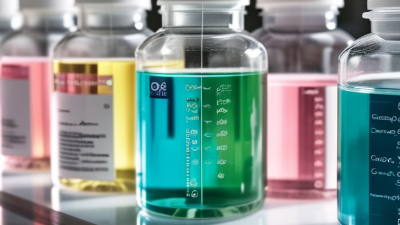
Application as an Intermediate for Quinoline-Based Compound Synthesis

8 Best Applications of 8-Hydroxy-5-Nitroquinoline

Application as an Intermediate for Quinoline-Based Compound Synthesis

8-Hydroxy-5-nitroquinoline is a versatile intermediate for designing quinoline-based compounds. Its quinoline nitrogen supports coordination and selective functionalization. The hydroxy group can be protected, etherified, or used to adjust molecular polarity. Meanwhile, the nitro group offers a useful route toward amino derivatives after controlled reduction. These features allow chemists to prepare ligands, fluorescent candidates, analytical reagents, and early-stage medicinal chemistry compounds from one structured core.

In practical synthesis, reaction order matters. Protecting the hydroxy group may improve selectivity during substitution or reduction. A chemist should monitor conversion with HPLC, TLC, or another validated method. Darkening during heating can indicate degradation, although it is not always conclusive. Purity also affects later coupling reactions. Small changes in solvent, temperature, and pH can alter yield significantly. The best route is not always the shortest route. That is an easy point to overlook.

Tips: Confirm the starting material’s identity and purity before planning transformations. Record color, solubility, reaction time, and isolated yield. Use suitable protective equipment and follow institutional chemical-handling procedures. Test a small scale first. Some proposed reactions may look reliable on paper but perform poorly with this heteroaromatic structure. Careful optimization is often necessary, especially when reducing the nitro group or modifying the phenolic oxygen.

Use in Metal-Ion Complexation and Coordination Chemistry Research

8 Best Applications of 8-Hydroxy-5-Nitroquinoline

8-Hydroxy-5-nitroquinoline is a useful ligand for metal-ion complexation studies. Its quinoline nitrogen and phenolic oxygen can form a stable chelating site. The nitro group changes electron distribution across the aromatic ring. This effect may influence binding strength, geometry, and complex color. Researchers can examine complexes with selected transition-metal ions, compare coordination numbers, and study square-planar, tetrahedral, or octahedral arrangements. The compound also supports work on stoichiometry, ligand selectivity, and metal–ligand stability. Spectroscopic measurements can reveal coordination changes through shifts in absorption bands. Crystallographic data may provide stronger structural evidence when suitable crystals form.

Tips: Control pH carefully, because protonation changes donor availability. Use freshly prepared solutions and record solvent composition. Compare blank spectra before assigning new peaks. Small differences matter. I would also test more than one metal-to-ligand ratio. Unexpected precipitation may reflect hydrolysis, poor solubility, or a different complex. It should not be treated as proof of successful coordination.

In practice, researchers can combine UV–visible spectroscopy, infrared analysis, elemental measurements, and magnetic data. These methods provide complementary evidence. However, no single signal confirms a complete structure. Temperature, ionic strength, and competing anions can alter the observed behavior. Reproducibility may be difficult in mixed solvents. That limitation deserves attention. Careful control experiments and transparent reporting make the resulting coordination study more reliable.

Investigation of Antimicrobial and Other Bioactive Molecules

8-Hydroxy-5-nitroquinoline is a useful scaffold for investigating antimicrobial and other bioactive molecules. Its quinoline ring supports interactions with cellular targets, while the hydroxy and nitro groups may influence metal binding and redox behavior. These features make it relevant to laboratory studies of bacterial growth, fungal survival, and microbial biofilms.

Researchers can examine its activity through minimum inhibitory concentration tests, time-kill studies, and biofilm models. Microscopy may reveal damaged cell surfaces or altered biofilm structure. However, one test cannot establish a complete mechanism. Results may change with pH, solvent choice, inoculum size, and exposure time. Careful controls are essential. So is replication.

The compound also offers several research directions beyond basic antimicrobial screening. Scientists may study enzyme inhibition, metal-chelation effects, oxidative stress, and interactions with cellular membranes. Cell-based assays can help evaluate anticancer or anti-inflammatory potential, but early findings require cautious interpretation. Solubility and selective toxicity remain practical challenges. I would not call every promising signal a therapeutic opportunity. Some results may reflect assay interference rather than genuine biological activity. Comparing multiple methods can expose that weakness. This molecule is valuable partly because it raises difficult questions about mechanism, safety, and reproducibility.

8 Best Applications of 8 Hydroxy 5 Nitroquinoline - Investigation of Antimicrobial and Other Bioactive Molecules

Compound profile: 8-hydroxy-5-nitroquinoline, commonly referred to as nitroxoline; molecular formula C9H6N2O3; relative molecular mass approximately 190.16 g/mol.

No. Application Area Practical or Research Use Scientific Basis Evidence Status Key Consideration
1 Urinary Tract Antibacterial Therapy Used in some countries as an oral urinary antiseptic for selected bacterial urinary tract infections, subject to local prescribing requirements and susceptibility considerations. Concentrates in urine and interferes with bacterial metal-dependent enzymes and cellular processes. Established clinical use Clinical use and regulatory status vary by country; antimicrobial susceptibility and patient factors remain important.
2 Broad-Spectrum Antibacterial Screening Investigated against representative Gram-positive and Gram-negative organisms in microbiology and antimicrobial discovery programs. Its 8-hydroxyquinoline structure can chelate metal ions required by microbial enzymes and affect membrane-associated processes. In vitro evidence Laboratory activity does not automatically predict clinical efficacy, especially for systemic infections.
3 Antifungal Research Evaluated as a lead structure in studies of yeast and filamentous-fungus growth inhibition. Metal chelation, oxidative-stress effects, and disruption of essential fungal metabolic pathways have been proposed. Preclinical research Activity depends strongly on fungal species, assay conditions, exposure time, and formulation.
4 Antibiofilm and Anti-Virulence Studies Used in research examining prevention of microbial attachment, biofilm development, and persistence on biological or abiotic surfaces. Interferes with metal-dependent pathways and can affect microbial communication, stress adaptation, and extracellular-matrix formation. Preclinical research Most findings remain laboratory-based; mature biofilms may require combination strategies or optimized delivery systems.
5 Metal-Homeostasis and Metalloenzyme Research Applied as a chemical probe for studying iron, copper, and other transition-metal-dependent biological processes. The adjacent phenolic and quinoline nitrogen donor atoms form coordination complexes with metal ions. Mechanistic research Metal binding is influenced by pH, competing ligands, protein environment, and the oxidation state of the metal.
6 Anticancer Drug-Discovery Research Investigated as a repurposing candidate and lead scaffold in cell-based studies involving tumor growth, iron metabolism, and cellular stress. Reported mechanisms include metal sequestration, interference with iron-dependent biology, and modulation of pathways associated with proliferation. Preclinical research Cell and animal findings require further pharmacokinetic, toxicological, and clinical validation before therapeutic conclusions can be made.
7 Antiprotozoal and Parasite-Targeted Screening Used in exploratory screening of quinoline-based compounds against selected protozoal or parasitic targets. Quinoline-mediated metal interaction and disruption of parasite metabolic processes provide a rationale for investigation. Limited evidence Evidence is less developed than for urinary antibacterial applications and should be interpreted as exploratory.
8 Pharmaceutical Repurposing and Formulation Research Serves as a reference compound in studies of solubility enhancement, targeted delivery, combination therapy, and new therapeutic indications. Existing antimicrobial pharmacology and metal-binding behavior provide a starting point for optimization. Translational research Formulation design must address aqueous-solubility limitations, tissue exposure, tolerability, and drug-interaction risk.
Interpretation note: The evidence levels distinguish established clinical use from laboratory, mechanistic, and exploratory research. Research findings should not be interpreted as recommendations for self-medication or as proof of efficacy for unapproved indications.

Role in Analytical Chemistry, Chemical Sensing, and Detection Studies

8 Best Applications of 8-Hydroxy-5-Nitroquinoline

8-Hydroxy-5-nitroquinoline is a practical probe for analytical chemistry research. Its quinoline ring supports metal coordination, while the hydroxy and nitro groups modify electronic behavior. Researchers can examine metal-binding reactions with ultraviolet-visible spectroscopy. These studies may support colorimetric detection of selected ions in controlled samples. The compound also helps compare ligand strength, complex stability, and pH-dependent responses. Its use in solvent extraction studies can reveal how metal complexes move between aqueous and organic phases. This is useful for separation method development.

In chemical sensing, the compound can provide an absorbance change after interaction with target ions. A small color shift may indicate complex formation. However, the response is not always clean. Sample acidity, competing ions, solvent choice, and reaction time can change the signal. Detection studies may include calibration curves, selectivity tests, blank measurements, and recovery experiments. Researchers can also evaluate its performance in water analysis models, reaction monitoring, and comparative ligand screening. Fluorescence behavior should be tested rather than assumed, because the nitro group may reduce emission intensity. That detail deserves attention.

Tips: Prepare fresh standards, record the solution color, and control pH carefully. Use matrix-matched samples when possible. Include interference tests with realistic ion concentrations. A lower detection limit looks impressive, but poor repeatability weakens the result. Independent verification is still needed.